Monday, February 22, 2010
Eagless
Quick update. Through 129 holes over the weekend, not only did we see no eagles, we did not even see any birdies. No eagles of the flying variety, either, although there were plenty of buzzards (cricling my golf game, perhaps).

Monday, February 15, 2010
Third Eagle

You may find it beneficial to follow me around next weekend.
Unable to play golf much this winter, I've spent the past two weekends walking around without a white ball to chase through the woods.
During a hike at the Harris Lake Wake County Park the other day, we paused on a bit of high ground to look out over the lake, when a large shadow swooped up from behind. My first thought was "heron," but when I looked up I was surprised to see the broad white tailfeathers of a Bald Eagle. It was exciting, if not altogether surprising. Eagles are known to nest around nearby Jordan Lake, and since Harris Lake is used to dissipate heat from the Sherron Harris nuclear power plant, what bird wouldn't be enticed to escape this winter's cold via a trip to a relatively warmer pond?
The next weekend, I just went for a walk around my local golf course, which, being covered in snow, was not in play. I strayed from the paved cart path to test the depth of snow on the untrodden sixth tee, and looking out in the direction of nearby Sunset Lake, I discerned a large bird flying toward me. Funny, it looked like it had a white head. Sure enough, a second eagle in as many weeks. (Since I was not able to band the first eagle, there's no guaranteeing the second eagle was not really just the first, reseen, of[f] course.)
Lest you think it commonplace to see eagles about, I will explain that these were my first eagle sitings in North Carolina while on foot, ever. And I've covered plenty of miles of would-have-been eagle habitat afoot over the last 41 years here.
Knowing how things seem to happen in threes, if you would like to see an eagle, I recommend you follow me around next weekend. The weather forecast provides some optimism for the possibility of golf. Who knows, maybe somebody in my group will hole one from the fairway.
Friday, February 5, 2010
Title Revised
Dear No Reader,
I googled "The Blog Nobody Reads" and discovered the article doesn't apply - they's more than one of 'em. So I'm compelled, or perhaps obliged, to change my title yet again.
I apologize for the conceit.
I googled "The Blog Nobody Reads" and discovered the article doesn't apply - they's more than one of 'em. So I'm compelled, or perhaps obliged, to change my title yet again.
I apologize for the conceit.
Thursday, January 14, 2010
Free Press Kills Press Freedom
Almost an Onion headline, eh?
The newspaper publishing game was always, well, almost always, a business venture (maybe "Publick Occurrences Both Forreign and Domestick"* doesn't quite fit the profile), and as such I always contended that the only people who really had freedom of the press were the ones who owned the presses.
That aside, newspapers have always been provided practically for free. The dime or quarter we pay for the paper is really just payment to the person who delivers it, and at that it's a pretty good deal.
The functions that generate the paper itself, the reporters and editors, printers, tree growers, get paid by the advertisers. I should say, "got" paid by the advertisers.
So, in essence, we got our newspapers for free, and as we all know, there is no such thing as a free lunch, the demise of the newspaper is the result of the migration of advertising to other media.
One could argue that the Internet, to which much of the advertising is migrating, will become the "press," and since it ultimately is farther reaching, we will have greater press freedom. Unfortunately, the professional staffs of the newspapers are being replaced by the citizen staff of the 'net.
Will a mass medium of this sort rise to the occasion, or will the "facts" that get reported on the Internet, and more importantly the ones that win approval and shape public doctrine, be chosen based on their merit or their appeal?
*So this is what one gets for looking things up: Wikipedia reference for Publick Occurrences Both Forreign and Domestick: (double colons? what a concept; triple if you count the html tag (or should I say "tagge"?)
That was the first "newspaper" published in the American Colonies, well, more or less, and if you follow enough of the links you will discover, which I am surprised I did not know, the fourth page of the paper was left blank for citizen-written articles. So, well, maybe the ideas of a Popular Press and a Free Press shouldn't be separated.
The newspaper publishing game was always, well, almost always, a business venture (maybe "Publick Occurrences Both Forreign and Domestick"* doesn't quite fit the profile), and as such I always contended that the only people who really had freedom of the press were the ones who owned the presses.
That aside, newspapers have always been provided practically for free. The dime or quarter we pay for the paper is really just payment to the person who delivers it, and at that it's a pretty good deal.
The functions that generate the paper itself, the reporters and editors, printers, tree growers, get paid by the advertisers. I should say, "got" paid by the advertisers.
So, in essence, we got our newspapers for free, and as we all know, there is no such thing as a free lunch, the demise of the newspaper is the result of the migration of advertising to other media.
One could argue that the Internet, to which much of the advertising is migrating, will become the "press," and since it ultimately is farther reaching, we will have greater press freedom. Unfortunately, the professional staffs of the newspapers are being replaced by the citizen staff of the 'net.
Will a mass medium of this sort rise to the occasion, or will the "facts" that get reported on the Internet, and more importantly the ones that win approval and shape public doctrine, be chosen based on their merit or their appeal?
*So this is what one gets for looking things up: Wikipedia reference for Publick Occurrences Both Forreign and Domestick: (double colons? what a concept; triple if you count the html tag (or should I say "tagge"?)
That was the first "newspaper" published in the American Colonies, well, more or less, and if you follow enough of the links you will discover, which I am surprised I did not know, the fourth page of the paper was left blank for citizen-written articles. So, well, maybe the ideas of a Popular Press and a Free Press shouldn't be separated.
Thursday, December 3, 2009
Two Presses

There are two presses in America: The cynical press and the idealistic press.
For awhile in my brief days as a newspaperman I thought the cynical press was the idealistic press, but it was I who turned out to be cynical.
[Photos from wikipedia entry for printing press, commons license, see wikipedia for more on the license. Same goes for White House picture below, except it is under White House, not printing press.]
[Photos from wikipedia entry for printing press, commons license, see wikipedia for more on the license. Same goes for White House picture below, except it is under White House, not printing press.]
Lest you get idealistic about the idea of an ideal press, let me point out that Adolph Hitler, and maybe Ronald Reagan, were idealists.
The cynical press essentially looks for the bad in everything. They are the muckrakers, the "investigative reporters," and sportswriters.
Well, okay, there's also the pandering press, of which sportswriters also tend to be a part, but the pandering press really isn't about news, it's about putting people's faces in the paper and sucking up.
The cynical press is going to attack whomever.
The idealistic press is going to stand up for their ideals. My country, may she ever be right, but right or wrong, my country.
As long as it is a Republican country.
This is why Barack Obama has an image problem. If he were a Republican, the cynical press would be attacking him, but the idealistic press would be supporting him. But he's a foreign-born socialist muslim, so the idealistic press attack him.
The net result is that, unlike his predecessor (the worst President ever to desecrate the White House), Obama has no public voice of support.
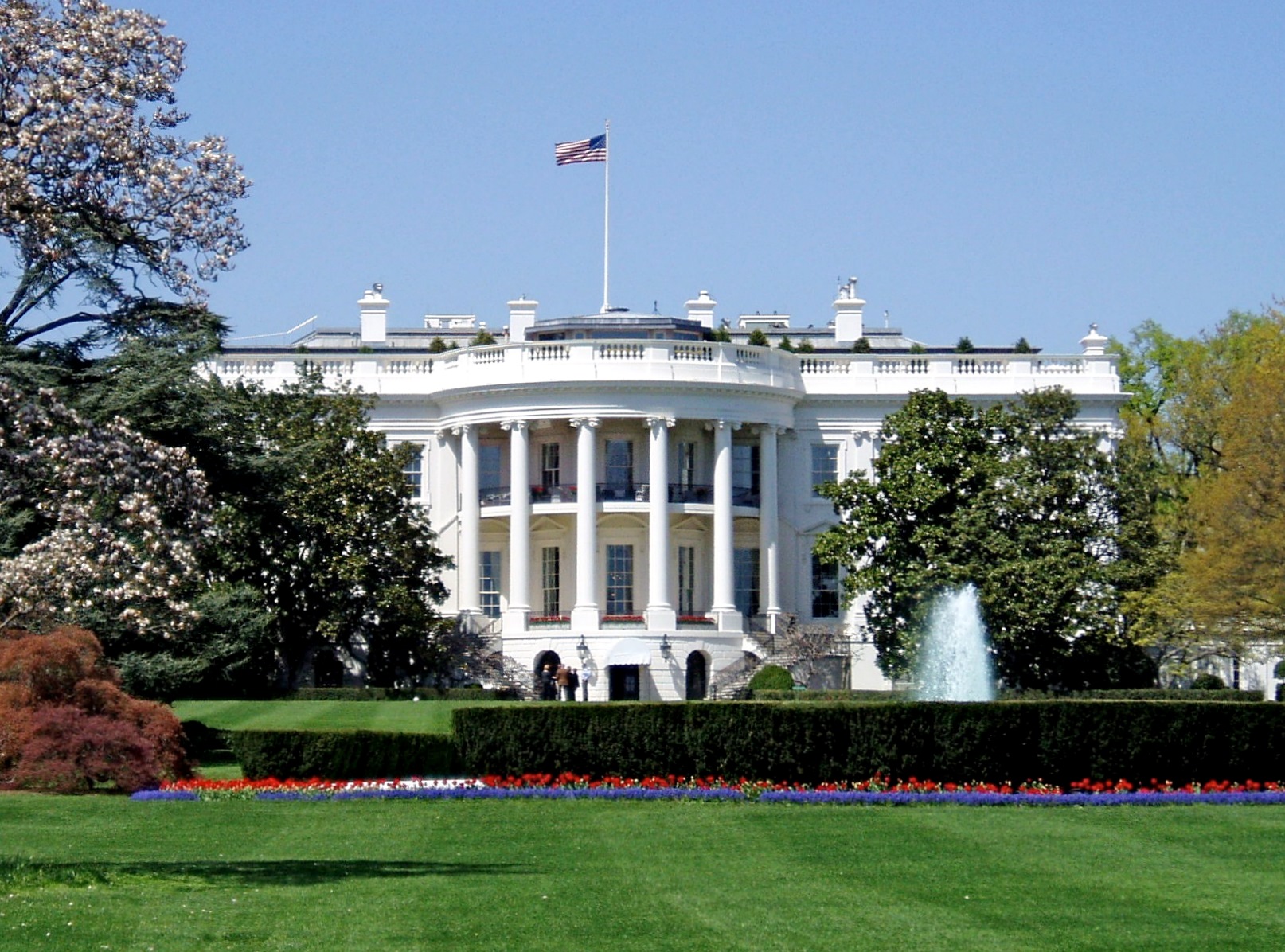
If the Huddled Masses are actually swayed by the shrill of the press, then there's some chance the Cons will retake control and finish the job.
Monday, October 5, 2009
Stray Paper
 One summer during college my friend Ty White and I discovered the Film Forum. The Film Forum was an artsy movie house on the fringes of downtown Atlanta run by Bestoink Dooley, of Big Movie Shocker fame, who challenged the mores of the time by showing such radical flicks as "W.R. - Mysteries of the Organism," and "A Clockwork Orange." I'm pretty sure he got shut down once or twice. That's also where I saw "Alice's Restaurant."
Among the other movies we stumbled into that summer was "The Music Lovers," a biography of Tchaikovsky with Richard Chamberlain in the starring role. This movie was taken extremely seriously by others in attendance, and I think developed some kind of cult status, but Ty and I thought it hilarious. It focused on the composer's homosexuality, and IMDB describes it as a "compelling and bizarre story" http://www.imdb.com/title/tt0066109/; little did we realize at the time how well it was typecast.

This was the first of a trilogic biopia of the classical composer genre directed by Ken Russell. The third movie in the trilogy was Lisztomania, starring Roger Daltrey of the Who. This was far and away the most publicized - and roundly criticized - of the three flicks, what with Daltrey in the lead (Russell had directed the movie version of "Tommy" earlier that year). I missed Liszt.
The one that moved me most of the trilogy was "Mahler." I don't recognize a single name from the cast (Robert Powell as Gustav Mahler?), and as near as I can recall we did not laugh once during the movie. It was as though Russell had made the equivalent of a tone poem, in reverse, a moving picture set as accompaniment to the music of the composer.
All of which is to connect to Tift Merritt's photography display in Raleigh last spring (2009), "Other Countries," which was hosted by the Mahler Gallery. I' ve got a neat little booklet from the exhibition containing copies of all the photos that were on display, along with some of Tift's notes about how the photos tie together with the time she spent in Paris writing the album "Another Country."
I went to the exhibit twice. The first time was the night of the accompanying concert at the Fletcher Opera House in Raleigh, when I was probably still contagious with what may have been the first case of swine flu to hit the Triangle. I'd been at MerleFest the weekend before (as had Tift), where there had been a Mariachi Band, and the first news of swine flu made NPR then. When I got back home, I started getting a sore throat, and the day before Tift's show I spiked a fever. It's even possible I passed the bug on to Tift, who was a bit under the weather a couple days later when she was performing in England. Anyway, not because of the flu but because of the concert, I was only able to rush through the Mahler.
A few weeks later, just before the exhibit closed, I convinced my wife to drop by the Mahler with me, and looked again at the the photographs. I noticed on the opposite wall a montage of scribbled notes lacquered to a canvas; I'd caught a glance of this part of the display the first time through but thought they were some other artist's work. On closer inspection, I discovered it was an assortment of Tift's actual notes as she composed the songs to "Another Country" in her Paris apartment.
Now, I liked the photos, don't get me wrong, there are some interesting portraits, nice geometries, and one or two excellent combinations of portraiture AND geometry. There are a couple of shots I believe from the Rodin museum - the same museum where my wife had bumped a pedestal and very nearly spilled one of Rodin's hands masterpieces onto the floor, where surely it would have broken.
But I was overwhelmed by the bits of text, which were both nicely arranged as a work of visual art, in themselves, as well as a window into the creative heart of the artist.
All of which is to connect to Tift Merritt's photography display in Raleigh last spring (2009), "Other Countries," which was hosted by the Mahler Gallery. I'
 ve got a neat little booklet from the exhibition containing copies of all the photos that were on display, along with some of Tift's notes about how the photos tie together with the time she spent in Paris writing the album "Another Country."
I went to the exhibit twice. The first time was the night of the accompanying concert at the Fletcher Opera House in Raleigh, when I was probably still contagious with what may have been the first case of swine flu to hit the Triangle. I'd been at MerleFest the weekend before (as had Tift), where there had been a Mariachi Band, and the first news of swine flu made NPR then. When I got back home, I started getting a sore throat, and the day before Tift's show I spiked a fever. It's even possible I passed the bug on to Tift, who was a bit under the weather a couple days later when she was performing in England. Anyway, not because of the flu but because of the concert, I was only able to rush through the Mahler.
A few weeks later, just before the exhibit closed, I convinced my wife to drop by the Mahler with me, and looked again at the the photographs. I noticed on the opposite wall a montage of scribbled notes lacquered to a canvas; I'd caught a glance of this part of the display the first time through but thought they were some other artist's work. On closer inspection, I discovered it was an assortment of Tift's actual notes as she composed the songs to "Another Country" in her Paris apartment.
Now, I liked the photos, don't get me wrong, there are some interesting portraits, nice geometries, and one or two excellent combinations of portraiture AND geometry. There are a couple of shots I believe from the Rodin museum - the same museum where my wife had bumped a pedestal and very nearly spilled one of Rodin's hands masterpieces onto the floor, where surely it would have broken.
But I was overwhelmed by the bits of text, which were both nicely arranged as a work of visual art, in themselves, as well as a window into the creative heart of the artist.
Tift isn't the only one who can work in a paper medium. My father, whose grandmother taught art in college and whose mother painted flowers on plates, always granted more credit to the artist than any other's line of work, and dabbled himself in the occasional medium (see his historical novel in a previous post). One of my father's diversions was a trip into making paper. His masterpiece, after 9/11 (top, left) hangs in my sister Janet's house. We have one of his several crosses (above, right); I'd argue his best.
Odd that my father would have specialized in paper crosses - he never went to church.
Thursday, May 28, 2009
To See or Not To See
I had a great-uncle DeWitt who lost his vision in a sawmill accident when he was young. At some point in his life thereafter he acquired a silver dollar, which he liked to hold in his hand and rub.
When I was young I lived across the street from Billy Flanders, whose parents ran vending machine racks. They collected coins, and since I was exposed to the hobby, I started collecting coins as well. In those days, one could actually find interesting coins in circulation. Today the only interesting coin in circulation is a wheat penny.
Since I was the coin collector in the family, I wound up with several notable coins, including Indian head pennies from my Mother's Mother's house, a 1909 VDB penny from my Father's Mother's penny jar (the penny has subsequently disappeared), and Uncle DeWitt's silver dollar. Uncle DeWitt rubbed a lot of the surface off that coin.
This leads to the latest commorative offering from the U.S. Mint, the Louis Braille Bicentennial Silver Dollar.

I believe this qualifies as "irony." Commerative Coins are made to be looked at, not handled, especially proof coins. Braille, I figure, is meant to be felt, not seen.
When I was young I lived across the street from Billy Flanders, whose parents ran vending machine racks. They collected coins, and since I was exposed to the hobby, I started collecting coins as well. In those days, one could actually find interesting coins in circulation. Today the only interesting coin in circulation is a wheat penny.
Since I was the coin collector in the family, I wound up with several notable coins, including Indian head pennies from my Mother's Mother's house, a 1909 VDB penny from my Father's Mother's penny jar (the penny has subsequently disappeared), and Uncle DeWitt's silver dollar. Uncle DeWitt rubbed a lot of the surface off that coin.
This leads to the latest commorative offering from the U.S. Mint, the Louis Braille Bicentennial Silver Dollar.
I believe this qualifies as "irony." Commerative Coins are made to be looked at, not handled, especially proof coins. Braille, I figure, is meant to be felt, not seen.
Subscribe to:
Posts (Atom)
