The cacophony from the back seat exceeded Gertrude’s tolerance level as she pulled up to the stop sign where her subdivision emptied onto the main road.
“Mommy,” shrieked the boy.
“Mommy,” echoed the girl, louder
The boy escalated the volume a notch, “Mommy!”
Mommy understood these were competitive jabs at one another more than pleas directed to her. She turned around and, with a sweeping, withering look, put an end to the discussion. She let the clutch out even as she was turning back to the front, but still distracted, she mistimed the accelerator and the car bucked to a stop. Next car’s an automatic, she thought to herself as she reached for the keys to restart the engine.
Whoosh.
A dump truck flashed across her bow.
Thursday, August 12, 2010

Saturday, February 27, 2010
Tift Nifties
This is actually about coinage.
Tift Nifties (after Tom Swifties) was what I dubbed the practice over at Tift Merritt dot Net of converting syllables in words to include Tift's name in it, e.g., Certifticate of Merritt (I did not come up with that one, but it is extra perfect, say along with Merritt Tiftmas).
Like I said, this isn't about Tift Nifties (nor Tom Swifties), but about coinages, Tom noted freely. (Har har har, get it, "note" [vs. coin] and free vs. what you need coins for, anyway.)

Tiftadelic
Photo by permission.
If coinage was worth the paper it was printed on, then I wouldn't be slaving for Massah Duke, I'd be sitting in the counting house. But then, if a filbert blogged in the Forrest and nobody read it, would a Filbert Hockey (tm) score make a sound after digital photography eliminates the plastic film "tins" used as goals?
But I digress ("yes, you do - frequently").
I recently coined a new motto for my work group, "We put the 'we' in the Web" (tm).
I'll also flip a few mixed metaphors, "Water under the dam," and "The cat's out of the barn," being my favorites.
This naturally, from swerve of shore to bend of bay, brings us by a commodius vicus of recirculation back to today's coinage, "As even keeled as a prairie schooner" (tm).
Not sure what it actually means, but those (tm)'s are at least double entendred.
Tift Nifties (after Tom Swifties) was what I dubbed the practice over at Tift Merritt dot Net of converting syllables in words to include Tift's name in it, e.g., Certifticate of Merritt (I did not come up with that one, but it is extra perfect, say along with Merritt Tiftmas).
Like I said, this isn't about Tift Nifties (nor Tom Swifties), but about coinages, Tom noted freely. (Har har har, get it, "note" [vs. coin] and free vs. what you need coins for, anyway.)

Photo by permission.
If coinage was worth the paper it was printed on, then I wouldn't be slaving for Massah Duke, I'd be sitting in the counting house. But then, if a filbert blogged in the Forrest and nobody read it, would a Filbert Hockey (tm) score make a sound after digital photography eliminates the plastic film "tins" used as goals?
But I digress ("yes, you do - frequently").
I recently coined a new motto for my work group, "We put the 'we' in the Web" (tm).
I'll also flip a few mixed metaphors, "Water under the dam," and "The cat's out of the barn," being my favorites.
This naturally, from swerve of shore to bend of bay, brings us by a commodius vicus of recirculation back to today's coinage, "As even keeled as a prairie schooner" (tm).
Not sure what it actually means, but those (tm)'s are at least double entendred.
Monday, February 22, 2010
Eagless
Quick update. Through 129 holes over the weekend, not only did we see no eagles, we did not even see any birdies. No eagles of the flying variety, either, although there were plenty of buzzards (cricling my golf game, perhaps).
Monday, February 15, 2010
Third Eagle

You may find it beneficial to follow me around next weekend.
Unable to play golf much this winter, I've spent the past two weekends walking around without a white ball to chase through the woods.
During a hike at the Harris Lake Wake County Park the other day, we paused on a bit of high ground to look out over the lake, when a large shadow swooped up from behind. My first thought was "heron," but when I looked up I was surprised to see the broad white tailfeathers of a Bald Eagle. It was exciting, if not altogether surprising. Eagles are known to nest around nearby Jordan Lake, and since Harris Lake is used to dissipate heat from the Sherron Harris nuclear power plant, what bird wouldn't be enticed to escape this winter's cold via a trip to a relatively warmer pond?
The next weekend, I just went for a walk around my local golf course, which, being covered in snow, was not in play. I strayed from the paved cart path to test the depth of snow on the untrodden sixth tee, and looking out in the direction of nearby Sunset Lake, I discerned a large bird flying toward me. Funny, it looked like it had a white head. Sure enough, a second eagle in as many weeks. (Since I was not able to band the first eagle, there's no guaranteeing the second eagle was not really just the first, reseen, of[f] course.)
Lest you think it commonplace to see eagles about, I will explain that these were my first eagle sitings in North Carolina while on foot, ever. And I've covered plenty of miles of would-have-been eagle habitat afoot over the last 41 years here.
Knowing how things seem to happen in threes, if you would like to see an eagle, I recommend you follow me around next weekend. The weather forecast provides some optimism for the possibility of golf. Who knows, maybe somebody in my group will hole one from the fairway.
Friday, February 5, 2010
Title Revised
Dear No Reader,
I googled "The Blog Nobody Reads" and discovered the article doesn't apply - they's more than one of 'em. So I'm compelled, or perhaps obliged, to change my title yet again.
I apologize for the conceit.
I googled "The Blog Nobody Reads" and discovered the article doesn't apply - they's more than one of 'em. So I'm compelled, or perhaps obliged, to change my title yet again.
I apologize for the conceit.
Thursday, January 14, 2010
Free Press Kills Press Freedom
Almost an Onion headline, eh?
The newspaper publishing game was always, well, almost always, a business venture (maybe "Publick Occurrences Both Forreign and Domestick"* doesn't quite fit the profile), and as such I always contended that the only people who really had freedom of the press were the ones who owned the presses.
That aside, newspapers have always been provided practically for free. The dime or quarter we pay for the paper is really just payment to the person who delivers it, and at that it's a pretty good deal.
The functions that generate the paper itself, the reporters and editors, printers, tree growers, get paid by the advertisers. I should say, "got" paid by the advertisers.
So, in essence, we got our newspapers for free, and as we all know, there is no such thing as a free lunch, the demise of the newspaper is the result of the migration of advertising to other media.
One could argue that the Internet, to which much of the advertising is migrating, will become the "press," and since it ultimately is farther reaching, we will have greater press freedom. Unfortunately, the professional staffs of the newspapers are being replaced by the citizen staff of the 'net.
Will a mass medium of this sort rise to the occasion, or will the "facts" that get reported on the Internet, and more importantly the ones that win approval and shape public doctrine, be chosen based on their merit or their appeal?
*So this is what one gets for looking things up: Wikipedia reference for Publick Occurrences Both Forreign and Domestick: (double colons? what a concept; triple if you count the html tag (or should I say "tagge"?)
That was the first "newspaper" published in the American Colonies, well, more or less, and if you follow enough of the links you will discover, which I am surprised I did not know, the fourth page of the paper was left blank for citizen-written articles. So, well, maybe the ideas of a Popular Press and a Free Press shouldn't be separated.
The newspaper publishing game was always, well, almost always, a business venture (maybe "Publick Occurrences Both Forreign and Domestick"* doesn't quite fit the profile), and as such I always contended that the only people who really had freedom of the press were the ones who owned the presses.
That aside, newspapers have always been provided practically for free. The dime or quarter we pay for the paper is really just payment to the person who delivers it, and at that it's a pretty good deal.
The functions that generate the paper itself, the reporters and editors, printers, tree growers, get paid by the advertisers. I should say, "got" paid by the advertisers.
So, in essence, we got our newspapers for free, and as we all know, there is no such thing as a free lunch, the demise of the newspaper is the result of the migration of advertising to other media.
One could argue that the Internet, to which much of the advertising is migrating, will become the "press," and since it ultimately is farther reaching, we will have greater press freedom. Unfortunately, the professional staffs of the newspapers are being replaced by the citizen staff of the 'net.
Will a mass medium of this sort rise to the occasion, or will the "facts" that get reported on the Internet, and more importantly the ones that win approval and shape public doctrine, be chosen based on their merit or their appeal?
*So this is what one gets for looking things up: Wikipedia reference for Publick Occurrences Both Forreign and Domestick: (double colons? what a concept; triple if you count the html tag (or should I say "tagge"?)
That was the first "newspaper" published in the American Colonies, well, more or less, and if you follow enough of the links you will discover, which I am surprised I did not know, the fourth page of the paper was left blank for citizen-written articles. So, well, maybe the ideas of a Popular Press and a Free Press shouldn't be separated.
Thursday, December 3, 2009
Two Presses

There are two presses in America: The cynical press and the idealistic press.
For awhile in my brief days as a newspaperman I thought the cynical press was the idealistic press, but it was I who turned out to be cynical.
[Photos from wikipedia entry for printing press, commons license, see wikipedia for more on the license. Same goes for White House picture below, except it is under White House, not printing press.]
[Photos from wikipedia entry for printing press, commons license, see wikipedia for more on the license. Same goes for White House picture below, except it is under White House, not printing press.]
Lest you get idealistic about the idea of an ideal press, let me point out that Adolph Hitler, and maybe Ronald Reagan, were idealists.
The cynical press essentially looks for the bad in everything. They are the muckrakers, the "investigative reporters," and sportswriters.
Well, okay, there's also the pandering press, of which sportswriters also tend to be a part, but the pandering press really isn't about news, it's about putting people's faces in the paper and sucking up.
The cynical press is going to attack whomever.
The idealistic press is going to stand up for their ideals. My country, may she ever be right, but right or wrong, my country.
As long as it is a Republican country.
This is why Barack Obama has an image problem. If he were a Republican, the cynical press would be attacking him, but the idealistic press would be supporting him. But he's a foreign-born socialist muslim, so the idealistic press attack him.
The net result is that, unlike his predecessor (the worst President ever to desecrate the White House), Obama has no public voice of support.
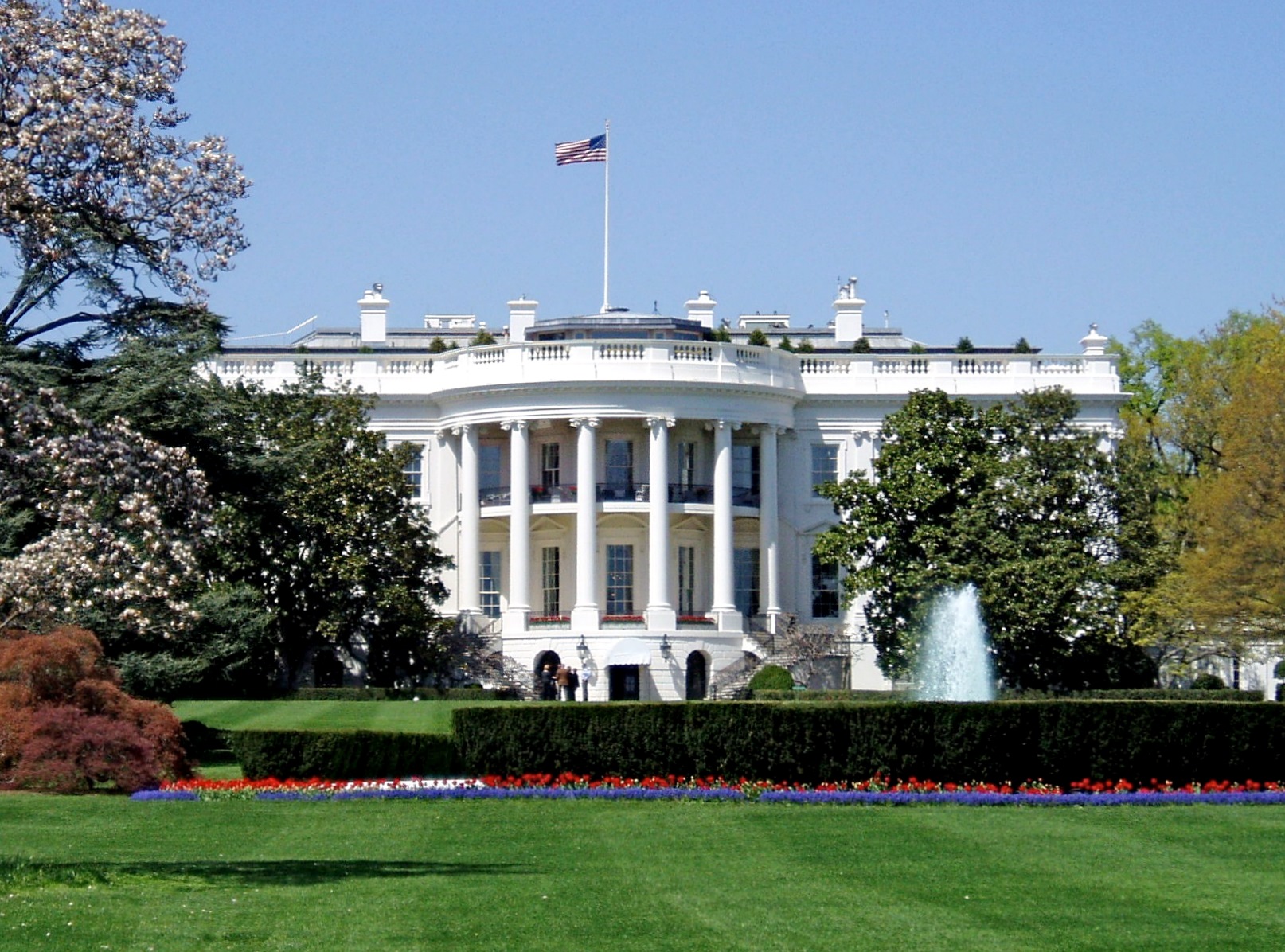
If the Huddled Masses are actually swayed by the shrill of the press, then there's some chance the Cons will retake control and finish the job.
Subscribe to:
Posts (Atom)
